- Also known as: Turkish baths, hammams
- Function: Public bathhouses
- Founded: Mid-15th century
- Location: Istanbul, Turkey (also adopted in South Eastern Europe, North Africa, West Asia, Central Asia, and South Asia)
- Architectural style: Ottoman and Islamic
- Main architects: Mimar Sinan, Mimar Hayruddin, Sulayman Aga
Turkish baths architecture | Inside Istanbul’s historic Ottoman-era hammams
Turkish baths | Architectural masterpieces of the Ottoman era
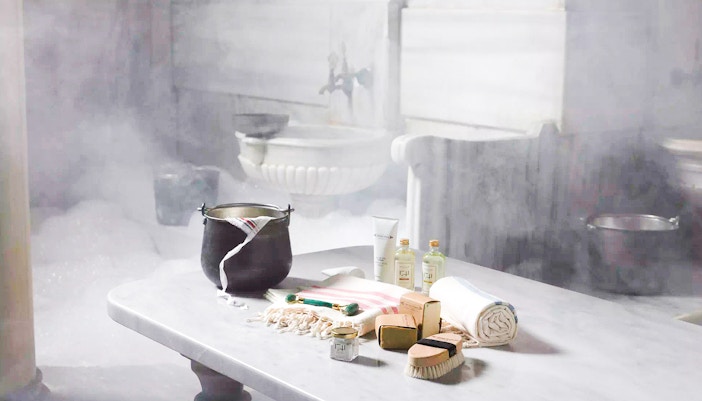
Rooted in Roman and Byzantine traditions, Turkish baths have evolved over centuries to blend practicality with artistic expression. Ottoman hammams in Istanbul stand as masterpieces of this architectural heritage, showcasing grandeur, engineering brilliance, and refined design. Today, these historic landmarks continue to draw visitors with their timeless beauty and cultural significance.
Turkish bath architecture & design | A quick overview
Layout of the Turkish hammam
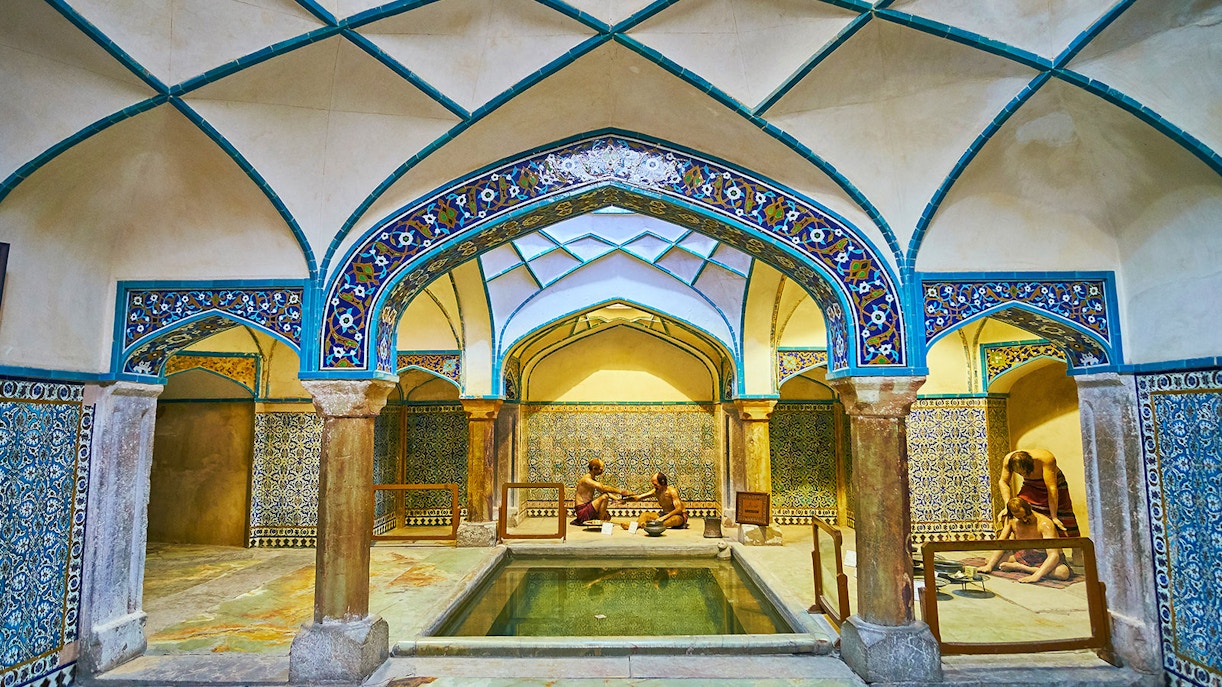
Typical Ottoman-era Turkish baths feature a sequential arrangement of rooms, each serving a distinct function, all connected by the flow of water. The hammams are usually divided into separate men’s and women’s sections or have separate hours for the different genders, with each section following identical layouts.
1/4
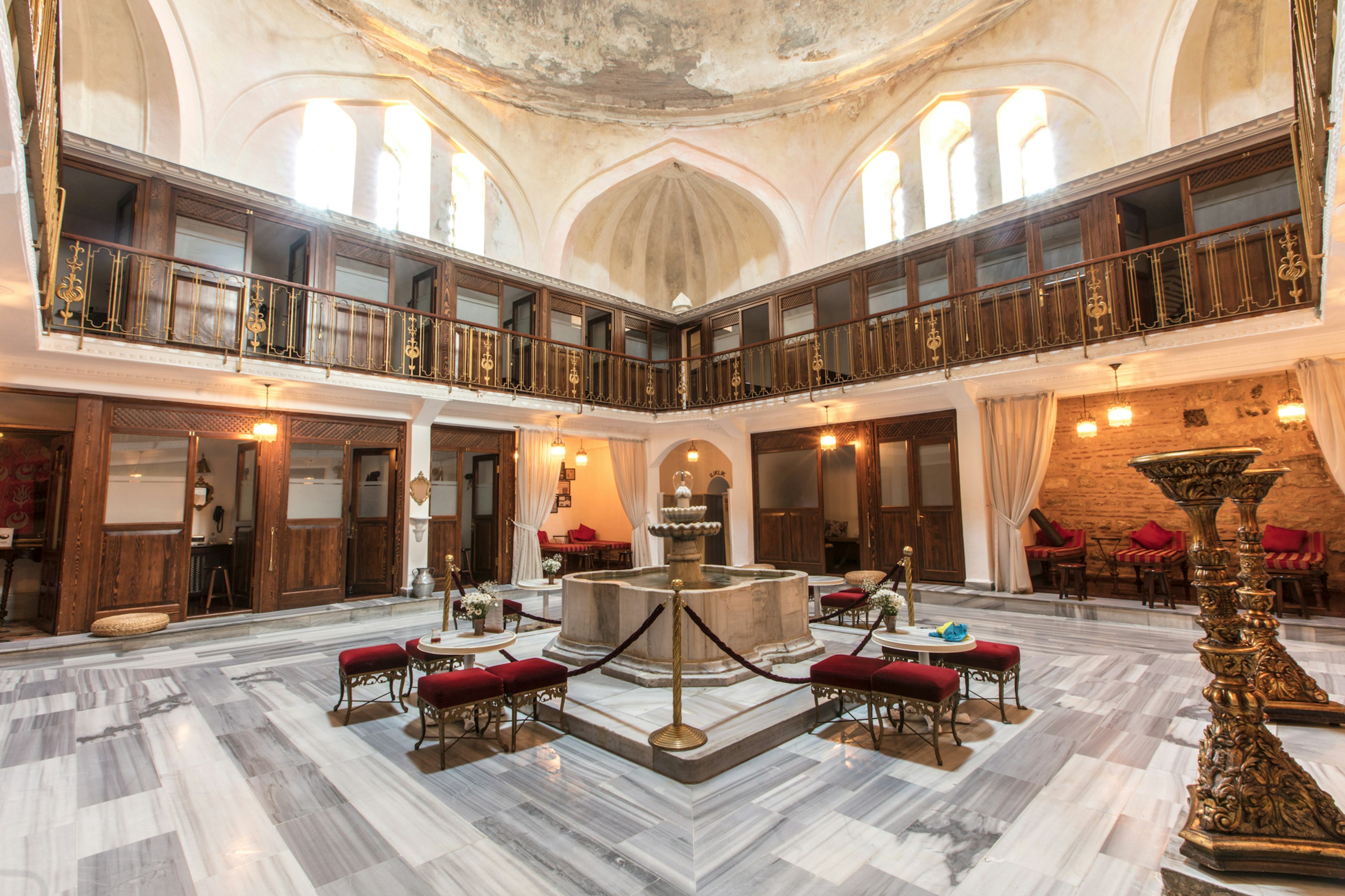
Entrance hall
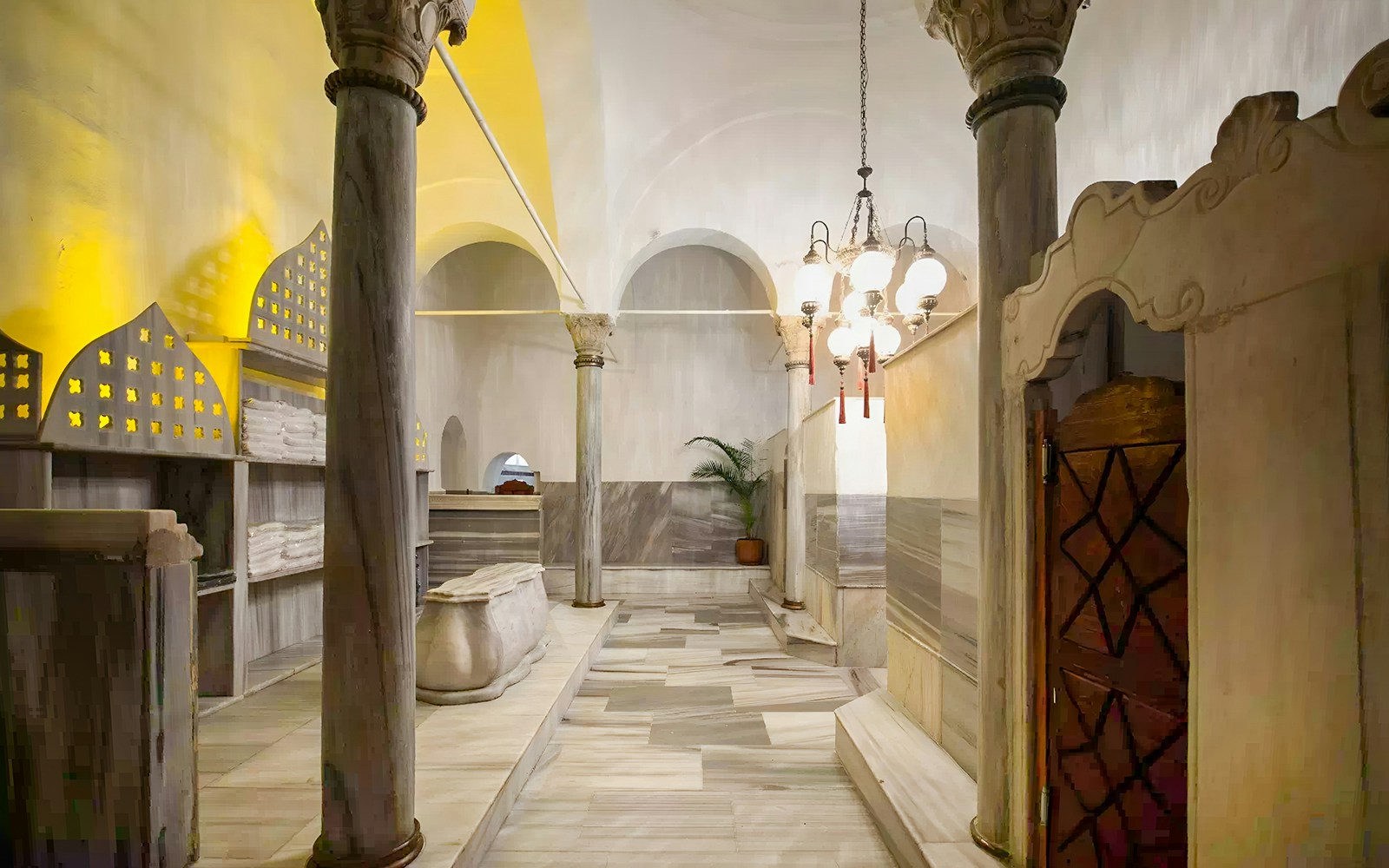
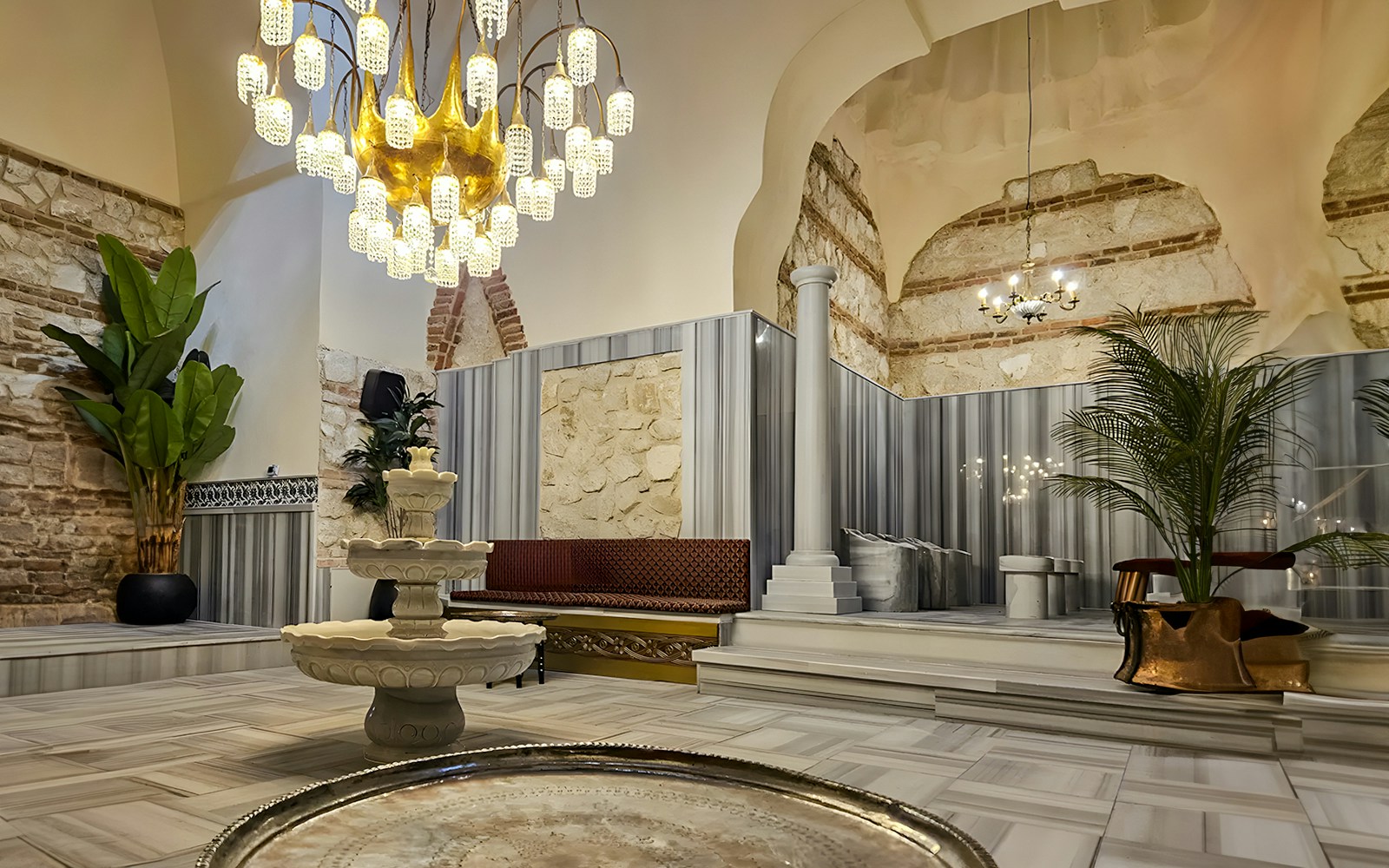
The entrance hall of a Turkish bath is a welcoming yet functional space, typically consisting of a reception area, changing rooms, and a refreshment counter. It often has a seating area where you can socialize with other guests.
Warm room (sıcaklık)
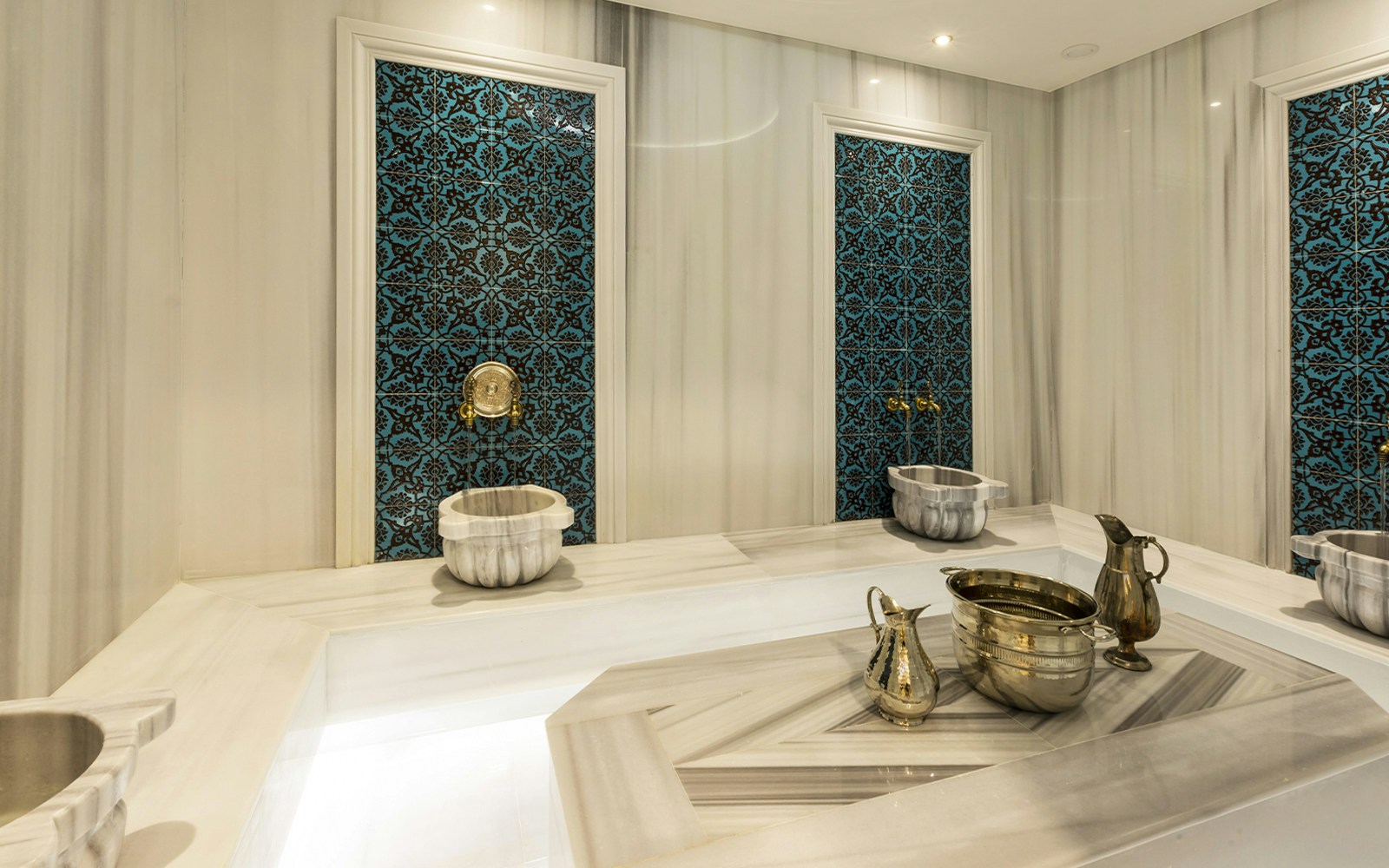
The warm room acclimates you to the heat and is where the hammam rituals begin with a bath and scrub. It has marble interiors and basins for washing.
Hot room (hararet)
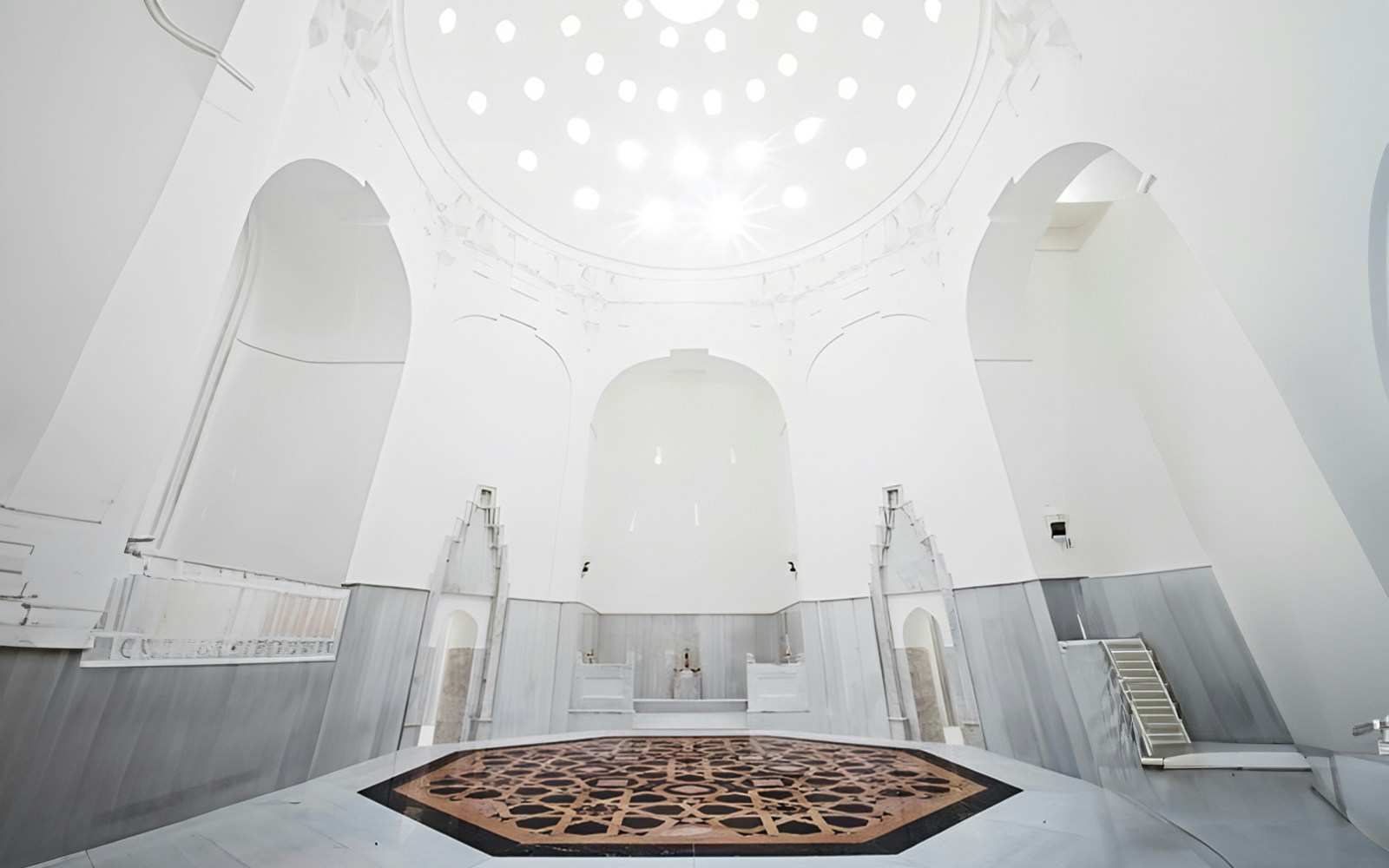
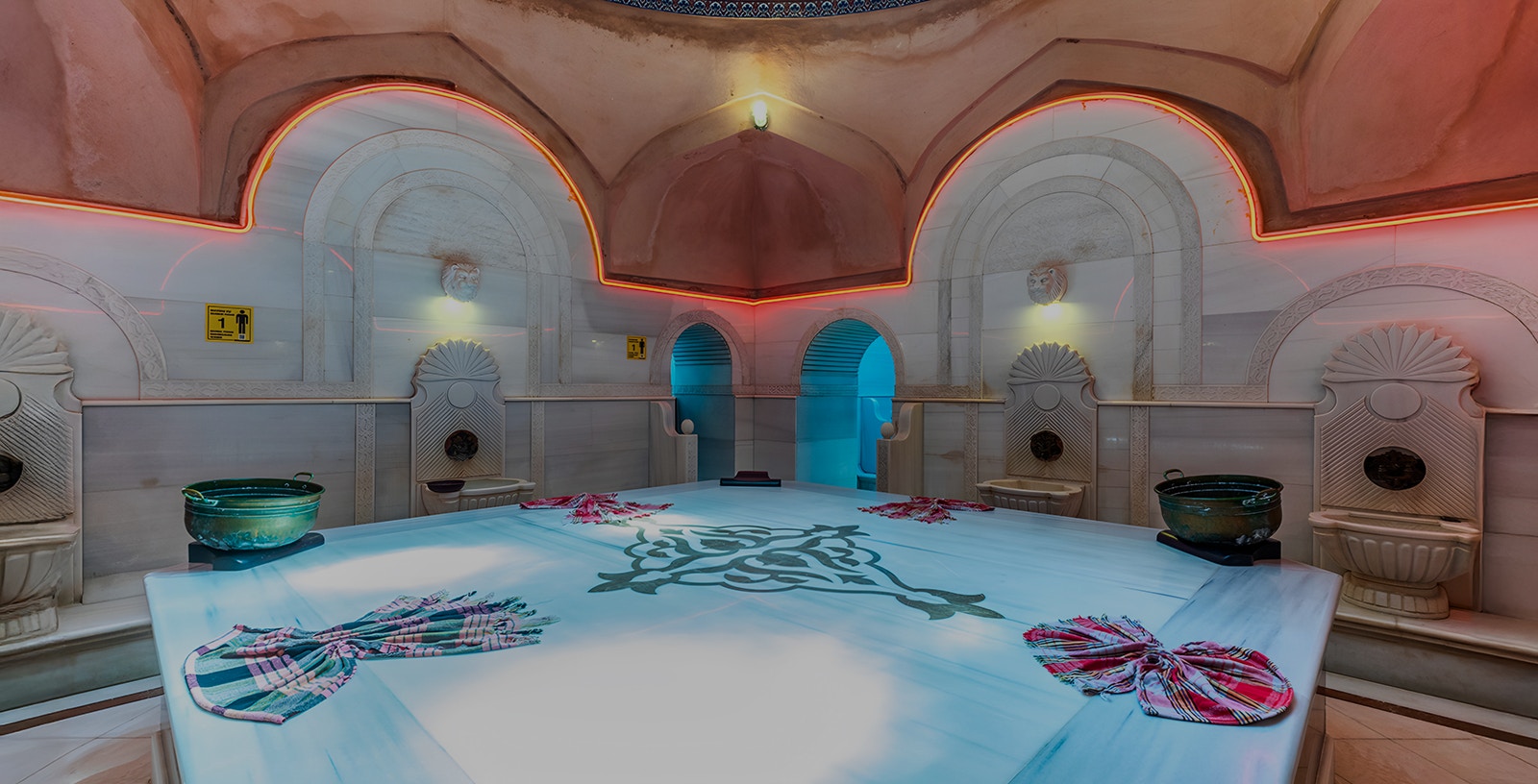
The hot room is the main steam chamber of a Turkish bath and typically features a domed ceiling. Its large central marble platform is where you lie down so that a bath attendant can scrub you clean and give you a massage.
Cool room (soğukluk)
Once the bathing rituals are complete, you can relax and unwind in the cool room, enjoy refreshments, and socialize with other visitors. In many Turkish baths, this space is merged with the entrance hall or attached to it.
Features of a Turkish bath
Domed ceiling
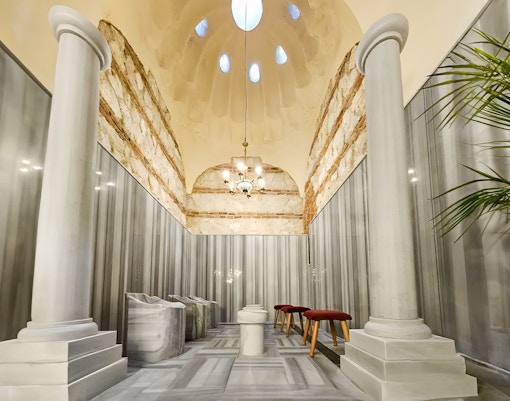
Domed ceilings help regulate the temperature inside the hammam, encourage the circulation of heat, and maintain humidity. They are typically dotted with small round or star-shaped perforations that let in soft, natural light and act as an outlet for excess steam.
.jpg?auto=compress%2Cformat&w=510.8727272727273&h=401.4&q=90&ar=14%3A11&crop=faces&fit=crop)
Raised marble platform
The raised marble platform, known as the “gobek tasi”, is the central feature of the Turkish bath’s main chamber (the hot room). Bathers lie on the platform to be scrubbed and massaged by the attendants.
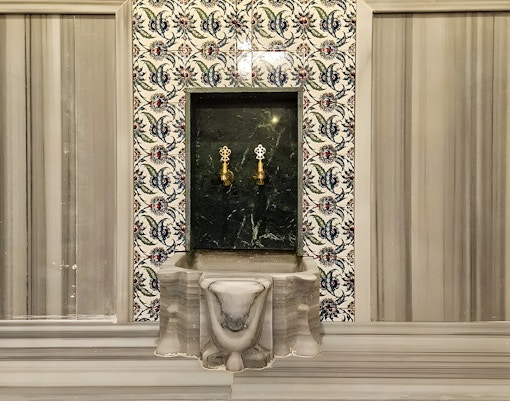
Basins and water channels
Marble basins are strategically placed along the walls of the bathing chamber for washing and scrubbing. Historically, fountains or intricate channels embedded in the hammam’s walls ensured an efficient flow of water.
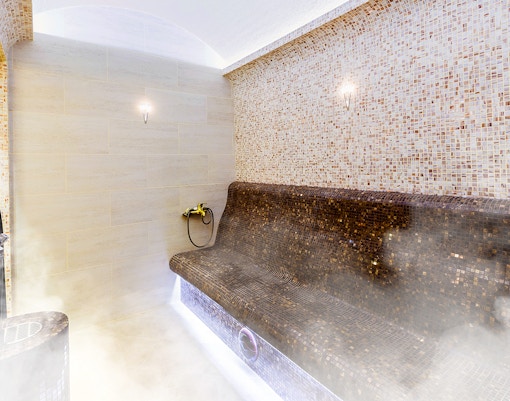
Underfloor heating
A remarkable innovation in historical Ottoman baths was the underfloor heating system known as the “hypocaust”. Hot air from a furnace would circulate under the floors, ensuring a steady supply of heat to the steam room and bathing chambers.
Architectural style of Turkish baths
Turkish baths in Istanbul are among the most characteristic monuments of Ottoman architecture. However, their design also reflects a rich blend of cultural influences including Islamic, Byzantine, and Central Asian architectural traditions.
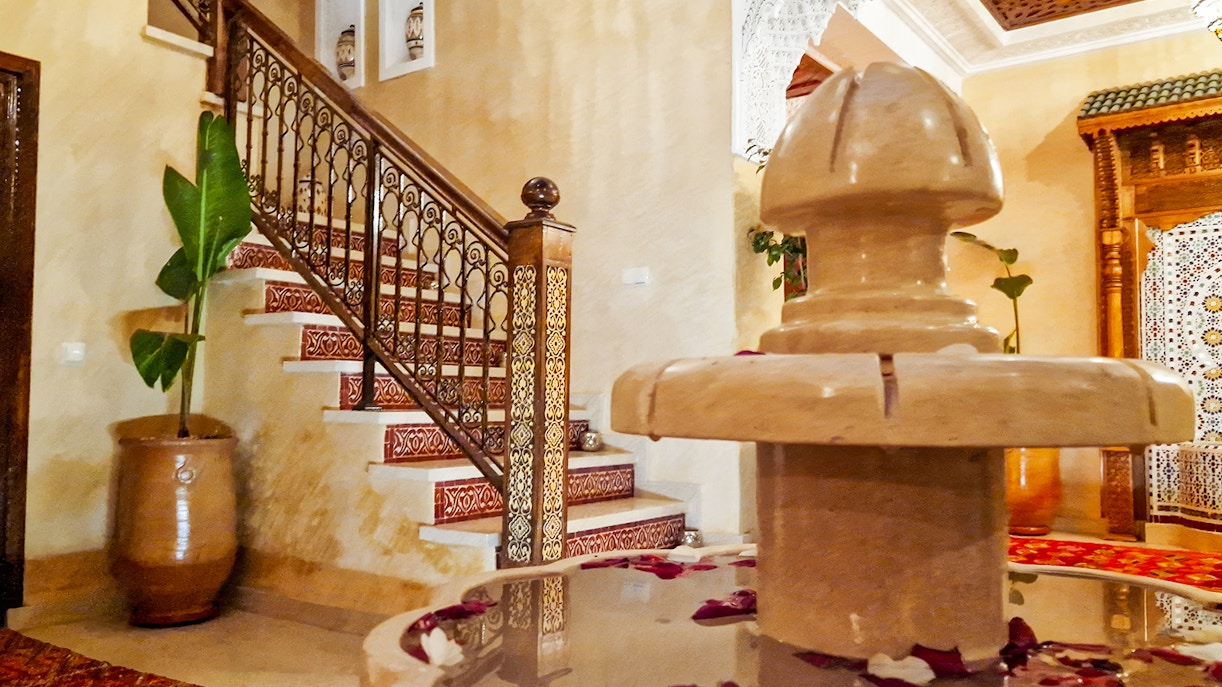
- Ottoman design: Turkish baths showcase the grandeur of Ottoman-era architecture with large central domes, high ceilings, and expansive layouts, combining aesthetics with functionality.
- Islamic aesthetics: Islamic influence is evident in the emphasis on symmetry for harmonious proportions and the use of geometric patterns and floral motifs in the decor.
- Byzantine heritage: Ottoman hammams inherited and adopted the Byzantine layout of a central bathing area surrounded by smaller rooms. The use of arches and vaulted ceilings for structural support is also a feature of Byzantine architecture. Additionally, mosaics were often used to beautify the interiors of baths.
- Central Asian influence: Hammam architects incorporated elements from Central Asian bathhouses such as the raised marble platform, which became the central feature of Turkish bathhouses.
- Baroque influence: Turkish baths built from the late 17th to the mid-18th centuries began incorporating ornamental elements from the European Baroque style. The Cagaloglu Hammam built in 1741 is a prime example.
Meet the architects | The masterminds behind Turkish bath architecture
- Mimar Sinan: A visionary Ottoman architect and civil engineer, Mimar Sinan revolutionized architecture with his innovative use of light and space. Serving under three sultans—Suleiman the Magnificent, Selim II, and Murad III—he designed some of the empire’s most iconic structures, including Istanbul’s Süleymaniye Mosque and the Selimiye Mosque in Edirne. His expertise extended to Turkish baths, with masterpieces like the Hurrem Sultan Hammam and Çemberlitaş Hammam showcasing his architectural brilliance.
- Mimar Hayruddin: Mimar Hayruddin was a renowned Ottoman-era architect during the mid-16th century, and incidentally, a student of Mimar Sinan. This meant he was part of the design and construction of the Suleymaniye Mosque. He also built the Sehzade hammam and worked on others along with his mentor. He is considered one of the pioneers of the classical Ottoman architectural style.
- Suleyman Aga: As the court architect of Sultan Mahmud I (r. 1730–1754), Suleyman Aga left his mark on Ottoman architecture with his design of the Cağaloğlu Hammam, one of Istanbul’s most renowned Turkish baths, completed in 1741. His work is distinguished by its refined fusion of traditional Ottoman aesthetics with Baroque influences, reflecting the artistic evolution of the era.
Structure of Turkish baths
Turkish baths were typically constructed using a combination of robust, high-quality materials and structural elements to ensure their stability.
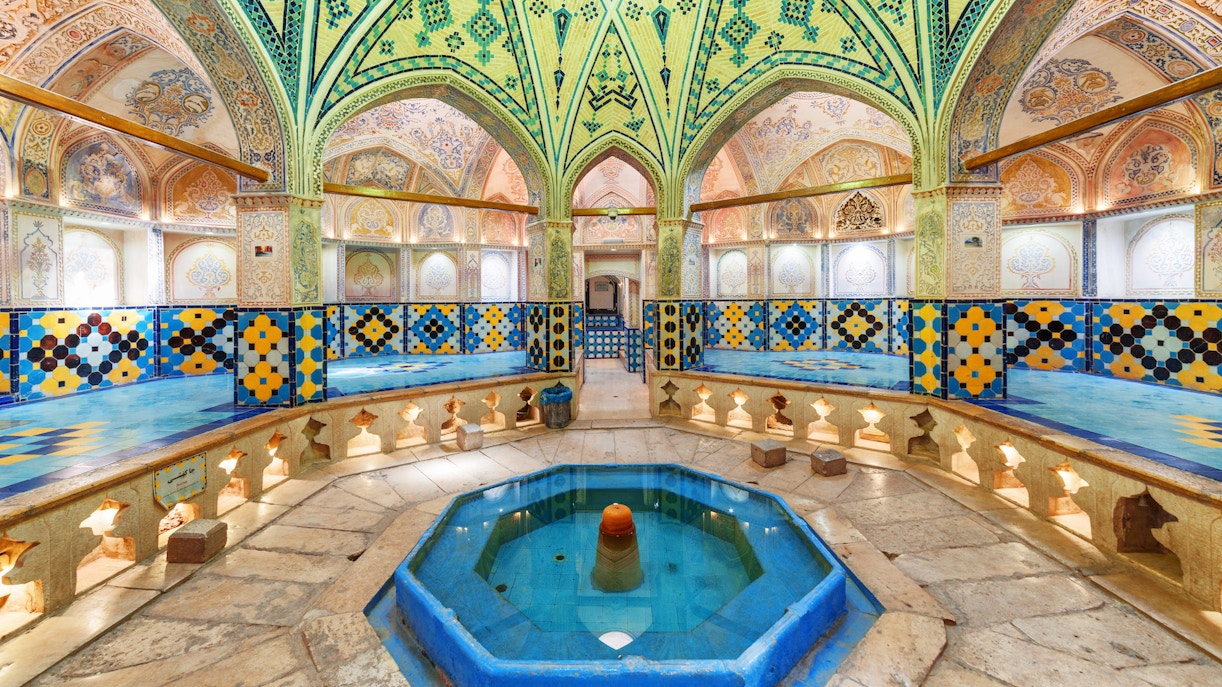
- Stone, marble, and brick were used for their strength, durability, and ability to retain heat, which were critical for the functionality of the hammams. While marble was used to decorate the interiors, stone was used for the flooring.
- Hammams were typically octagonal or square in shape. The structure was designed with load-bearing walls and vaulted ceilings, creating a robust framework that supported the large domes overhead.
- Other materials used included timber and plaster in the construction of the dome, and ceramic tiles for decoration.
Iconic Turkish baths of Istanbul
Frequently asked questions about Turkish baths architecture
Ottoman-era architecture seamlessly blended function and beauty in Turkish baths, using domed ceilings, skylights, and heat-retaining marble to enhance both practicality and luxury.
Turkish baths feature many exquisite decorative details such as Iznik tiles with floral and geometric patterns, Islamic Calligraphic inscriptions, intricately carved marble fountains and basins, and star-shaped perforations in the domed ceilings for atmospheric light.
During the Ottoman era, smaller or standalone hammams usually took about six months to a year to build. The construction of more elaborate Turkish baths or those that were part of bigger mosque complexes took multiple years to complete due to their grand designs and intricate decor work.
You can book your Turkish bath tickets online to experience traditional hammam rituals during your visit to Istanbul. This will allow you to unwind after a day’s sightseeing and also to appreciate the grand architecture and interiors of an Ottoman-era bathhouse.
Most Turkish baths in Istanbul are not accessible to wheelchair users due to their historic design and layout. You have to navigate staircases, narrow corridors, and uneven flooring, which might be challenging for visitors with mobility issues. Some modernized hammams have installed ramps and accessible facilities. It’s best to get in touch with the hammam you wish to visit in advance to inquire about accessibility options.
More reads
Plan your Turkish bath visit
Plan your Turkish bath visit
History of Turkish hammams
History of Turkish hammams